
_edited.png)
What Amish Families Know About Feeding a Family Without Wasting Money
- Survivalist Scoop
- 1 day ago
- 6 min read
Updated: 2 hours ago
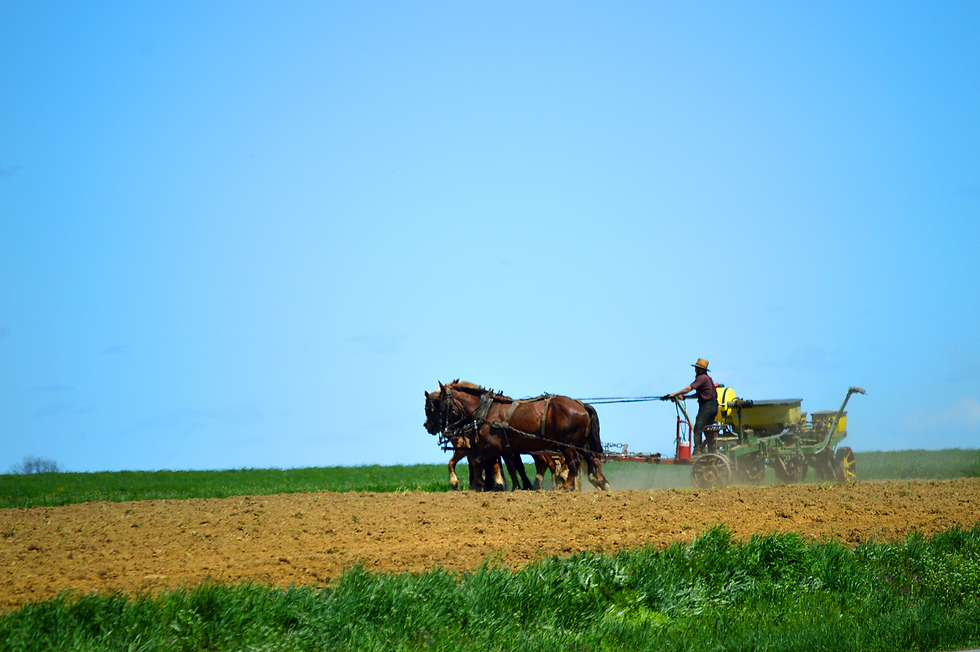
There was a time when feeding a family didn't mean pushing a cart through the supermarket and tossing whatever looked good into it.
People planned ahead.
They planted gardens. They preserved food. They bought flour by the sack and meat by the side.
Leftovers weren't garbage, and a dented can wasn't automatically a reason to pay twice as much for another one.
You can still see many of those habits in Amish communities today.
An Amish household may have a large family to feed, yet many of the principles behind its food budget are remarkably simple: produce what you can, buy intelligently, use what you have, and waste as little as possible.
You don't have to live on a farm or give up modern conveniences to put those principles to work.
Here are seven worth considering.
1. Turn Part of Your Yard Into a Grocery Store
A garden isn't just a hobby.
Done properly, it's a food-production system sitting a few steps from your back door.
Amish gardens tend to be considerably larger than the typical suburban garden, with an emphasis on practical vegetables that can feed a family beyond the summer months: potatoes, onions, carrots, cabbage, beans, tomatoes, corn and squash.
That's an important distinction.
The goal isn't simply to grow a few tomatoes for hamburgers in July. The goal is to grow food you can actually eat, preserve and store.
Even a modest garden can reduce the number of trips to the grocery store. And if you're willing to put in the work, a larger garden can provide a meaningful portion of a family's produce for months.
There's also another benefit that's harder to put a dollar value on: you're not completely dependent on whatever the supermarket happens to charge this week.
The lesson: If you've got unused ground, consider putting it to work.
2. Preserve the Harvest Instead of Buying It Back in Winter
Growing food is only half the job.
The other half is making it last.
Canning, freezing and other preservation methods allow a summer harvest to become winter food.
Tomatoes become sauce. Apples become applesauce. Green beans go into jars or the freezer. Excess produce can be stored instead of forgotten in the back of the refrigerator.
This is one area where older generations had an advantage: they understood that a good harvest wasn't something to celebrate for one weekend and then forget.
It was insurance.
You don't have to fill an entire basement with Mason jars. Start with the foods your family actually eats.
If you grow 30 pounds of tomatoes but nobody in your house likes tomato sauce, you've created work instead of savings.
The lesson: Grow and preserve what your family will actually use.
3. Don't Be Too Proud to Shop for Bargains
One of the more interesting Amish-country grocery traditions is the salvage or "bent-and-dent" store.
These stores sell products that regular supermarkets may not want: dented packages, discontinued products, overstock and merchandise approaching its sell-by date.
The savings can be substantial.
The trick is to shop with some flexibility.
Instead of deciding, "I'm making this exact meal tonight, and I need these six ingredients," look at what's available at a bargain price and then build some meals around it.
That requires a different mindset.
You're not shopping for convenience.
You're shopping for value.
And there's no shame in that.
A dented cereal box doesn't make the cereal inside taste worse. A package with an ugly label doesn't mean the food is inferior. Obviously, you still need to use common sense about food safety and expiration dates, but there's a difference between unsafe food and perfectly usable food that a supermarket can't sell at full price.
The lesson: Let the price influence the menu—not the other way around.
4. Buy the Staples You Actually Use in Bulk
Walk into a bulk-food store and you'll quickly discover that many basic ingredients are considerably cheaper when you stop buying them in tiny packages.
Flour.
Rice.
Oats.
Beans.
Sugar.
Cornmeal.
Spices.
Yeast.
But there's an important catch.
Bulk buying only saves money when you actually use the product.
A 25- or 50-pound bag of flour isn't a bargain if half of it eventually gets thrown away.
The smart approach is to identify the staples your household consistently consumes and buy those in larger quantities.
If your family regularly bakes bread, cooks beans or makes oatmeal, buying those ingredients in bulk can make sense.
If nobody in the house eats lentils, don't buy a 20-pound bag simply because the price per pound looks impressive.
The lesson: Buy in bulk because you use it—not because the package is big.
5. Stop Buying Meat One Package at a Time
Meat can take a big bite out of a family's grocery budget.
One traditional solution is to buy larger quantities at once.
A quarter or half beef, a whole hog, or another bulk purchase can lower the per-pound cost compared with continually buying small packages at retail.
Some families also purchase directly from farmers or local processors.
You don't have to butcher an animal yourself to benefit from the principle. Many processors can handle that work and return the meat packaged and ready for the freezer.
The bigger point is planning.
Instead of repeatedly walking into the store and paying whatever the current shelf price happens to be, you're making a deliberate purchase when the opportunity makes financial sense.
A chest freezer can be useful here—but again, only if you're buying foods your household will actually eat.
The lesson: Think like a buyer, not just a shopper.
6. Learn a Few Things You Used to Buy
There's something to be said for knowing how to make basic food yourself.
Bread is a good example.
A bag of flour can become loaf after loaf of bread, rolls, biscuits or other baked goods. The same principle applies to soups, sauces, pizza dough, desserts and other staples.
You don't need to become a professional baker.
Learn a handful of recipes your family enjoys and make those regularly.
And don't overlook the bigger advantage: homemade food gives you more control over what you're buying and how you're using your pantry.
This is particularly useful for families that have children or grandchildren around regularly. Feeding a crowd gets expensive when every snack comes from a package.
The lesson: A few basic kitchen skills can be worth more than another shopping app or coupon.
7. Bring Back "Waste Not, Want Not"
Perhaps the most important habit is also the simplest.
Don't throw away food you could have used.
Today's households routinely discard food because it was forgotten in the refrigerator, because leftovers weren't planned for, or because a perfectly usable ingredient wasn't used creatively.
Traditional cooking was different.
Yesterday's roast could become today's sandwiches.
Bones could become broth.
Vegetable scraps could go to the chickens or compost pile.
Leftover meat could become soup.
Extra food could become tomorrow's lunch.
Even cooking fats could have another use.
The point isn't to save every last scrap of food at any cost. The point is to develop the habit of asking a simple question before throwing something away:
Can I use this?
That question alone can change the way a household thinks about groceries.
It's Not About Being Cheap
There's a difference between being cheap and being frugal.
Cheap means refusing to spend money.
Frugal means making sure the money you spend accomplishes something worthwhile.
That's the real lesson behind many traditional Amish food practices.
They aren't based on complicated financial strategies. They're based on discipline.
Grow some of your own food.
Preserve what you can.
Buy when the price is right.
Purchase staples in sensible quantities.
Stock the freezer intelligently.
Cook at home.
And don't throw away something you could have used.
None of these ideas is revolutionary.
That's precisely why they're worth remembering.
For decades, American families used similar habits because they understood something we've sometimes forgotten: a dollar saved at the grocery store is still a dollar that stays in the household budget.
You don't have to live like the Amish to borrow some of their habits.
You just have to decide that convenience isn't always worth the price.
And if you've spent a lifetime working hard for your money, that's a pretty good principle to keep.


Comments