
_edited.png)
Why Your EDC Matters
- Survivalist Scoop
- 2 hours ago
- 4 min read

Most of us over 50 have spent decades learning how to handle problems.
We know how to change a tire. Fix a leaky faucet. Deal with a dead battery. Keep a pantry stocked. Maybe we even have enough food, water and equipment to ride out a serious disruption.
But there’s one kind of emergency that doesn’t give you time to prepare.
It’s the crisis that happens while you’re simply going about your day.
You’re getting lunch. Sitting in a restaurant. Walking through a parking lot. Stopping for gas. Waiting in traffic.
One minute everything is ordinary.
The next, it isn’t.
That’s the real preparedness lesson from the recent violence at an Idaho fast-food restaurant. The details of the incident are disturbing, but the larger lesson is straightforward: preparedness isn’t only about what happens at home.
It’s about being ready when something goes wrong somewhere else.
Stop Assuming Today Will Be Normal
At our age, routine can become a blind spot.
We know where we’re going. We know what we're ordering. We know where we usually park.
That familiarity can make us stop paying attention.
A better habit is simple situational awareness.
When you enter a restaurant, notice the exits. When you park, know how you would leave. When you're walking through a crowded area, occasionally look up from your phone and pay attention to what's happening around you.
This isn't paranoia.
It's the same common sense we've used for decades in other areas of life.

Have an Emergency Plan Before You Need One
You don't want to develop your plan while something is already going wrong.
Think through a few basic questions:
Where are the exits?
Where would I go if I had to leave immediately?
What would I do if my normal route were blocked?
Where is my vehicle?
Who am I responsible for getting out with me?
The goal isn't to predict exactly what will happen.
The goal is to avoid freezing because you haven't considered your options.
_______________________________________________
Here is a SPECIAL OFFER for a product from one our trusted sponsors:
_______________________________________________
Your Vehicle Is Part of Your Emergency Plan
One of the easiest preparedness improvements is also one of the least glamorous: think about how you park.
If practical, positioning your vehicle so you can leave without complicated maneuvering gives you another option during an emergency.
Don't block yourself in.
Don't assume everyone else will move out of your way.
And don't depend entirely on your GPS or cell phone to tell you what to do.
A little forethought can make a big difference when seconds matter.

Don't Forget Medical Preparedness
Preparedness isn't just about preventing trouble.
It's also about dealing with injuries afterward.
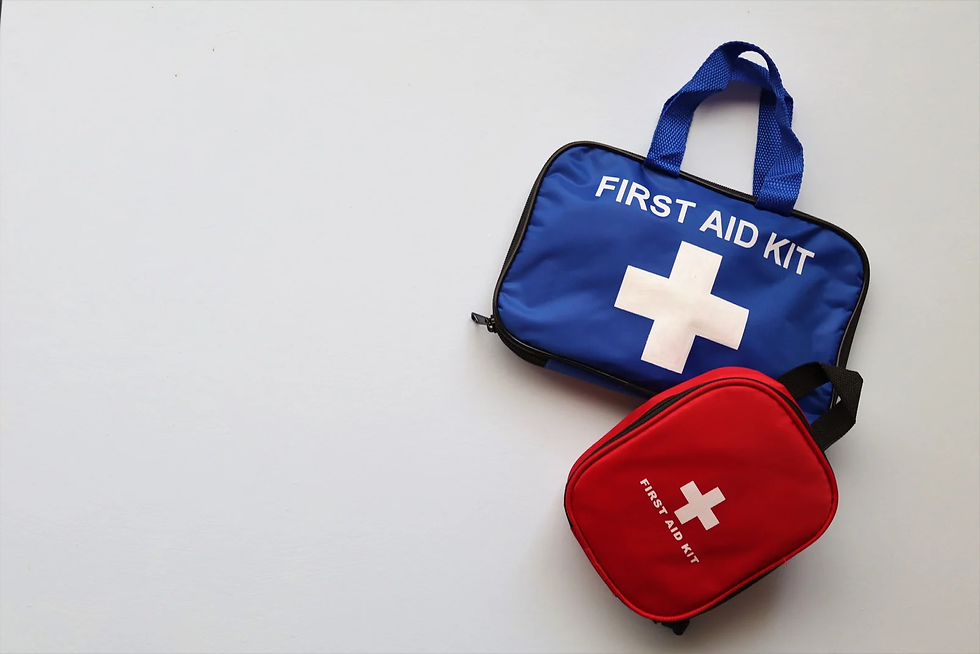
A basic first-aid kit belongs in your vehicle and another one should be readily accessible at home.
Learn how to use what you carry before an emergency occurs. A piece of equipment sitting unopened in a bag isn't much help if nobody knows what it does.
For serious bleeding, appropriate bleeding-control equipment and training can be particularly valuable while waiting for professional medical assistance.
The same principle applies to CPR and basic first aid.
You don't need to become a paramedic.
But knowing what to do during the first few minutes of an emergency is a worthwhile skill at any age.
Don't Confuse Courage With Stubbornness
There is another important lesson here.
If you're caught near violence, your objective isn't to prove how tough you are.
It's to get yourself and the people you're responsible for to safety.
If there is a safe opportunity to leave, leaving may be the smartest decision available.
Don't become so focused on your gear, your training, or your desire to "do something" that you ignore the simplest option: get away from the danger.
Every situation is different, and there is no universal response.
The important thing is having considered your options beforehand.

Training Beats Wishful Thinking
Buying equipment feels productive.
Training actually makes you better prepared.
Practice first aid. Refresh your driving skills. Review emergency plans with your spouse. Walk through what you'd do if your phone died, your vehicle broke down, or you suddenly had to leave a crowded location.
If you legally own defensive equipment, know the laws where you live and seek qualified, professional training appropriate to your circumstances.
The older we get, the more valuable good judgment becomes.
You don't have to be the fastest person in the room.
You don't have to be the strongest.
You need to recognize problems early and make sound decisions.
Preparedness Isn't Just for the End of the World
This may be the biggest mistake in modern prepping.
People spend years preparing for some hypothetical future catastrophe while overlooking emergencies that can happen on an ordinary Tuesday.
A power outage.
A vehicle accident.
A medical emergency.
Severe weather.
A violent incident in a public place.
A road closure that leaves you stranded.
These aren't science-fiction scenarios.
They're the kinds of problems that make everyday preparedness worthwhile.
You don't need a bunker to be prepared.
You need awareness, useful skills, a few sensible supplies, and the habit of thinking ahead.
After 50, you've accumulated something younger people don't have: experience.
Use it.
The best preparedness mindset isn't fear.
It's refusing to be caught completely by surprise.
_______________________________________________
Here is a SPECIAL OFFER for a product from one our trusted sponsors:
_______________________________________________


Comments